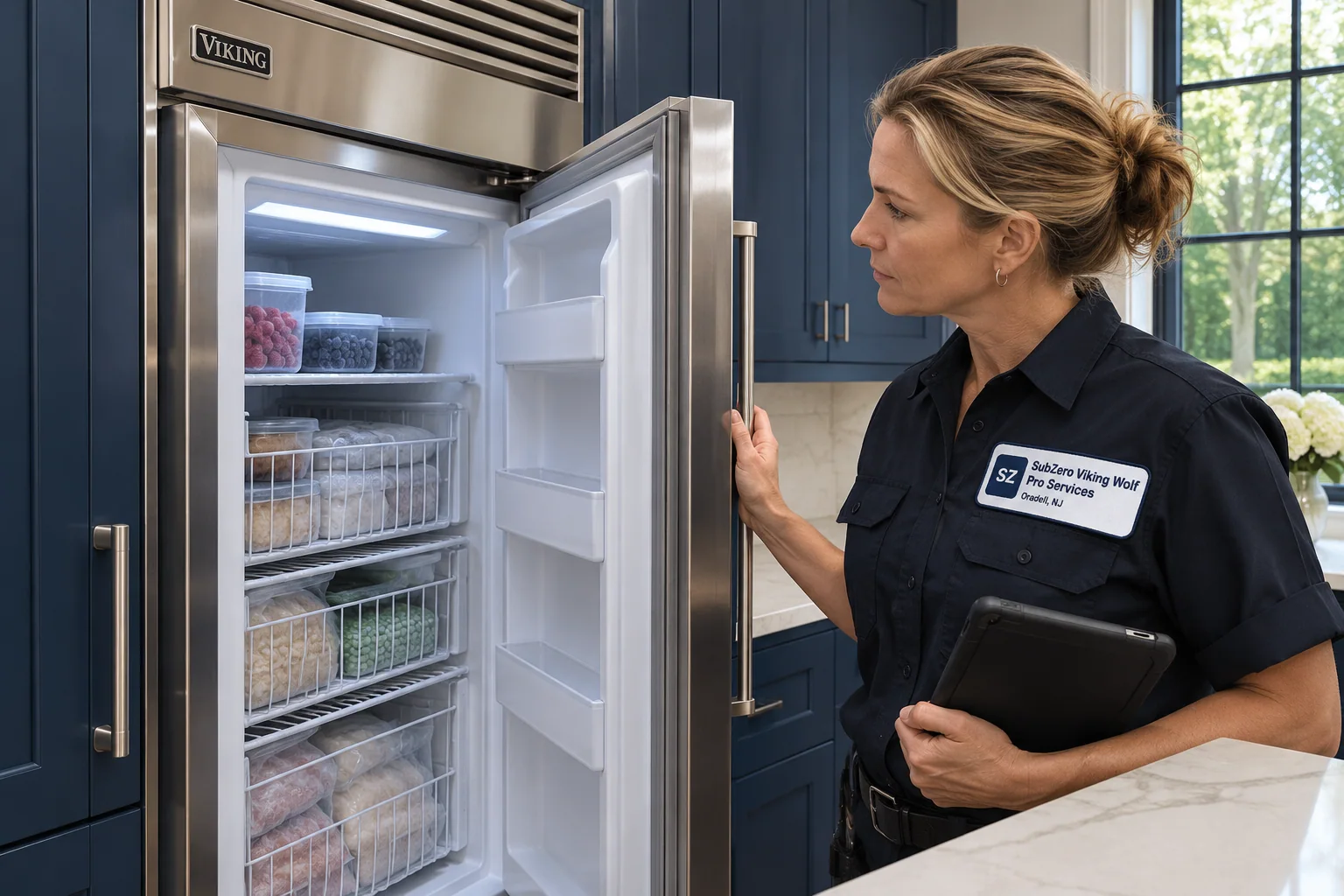
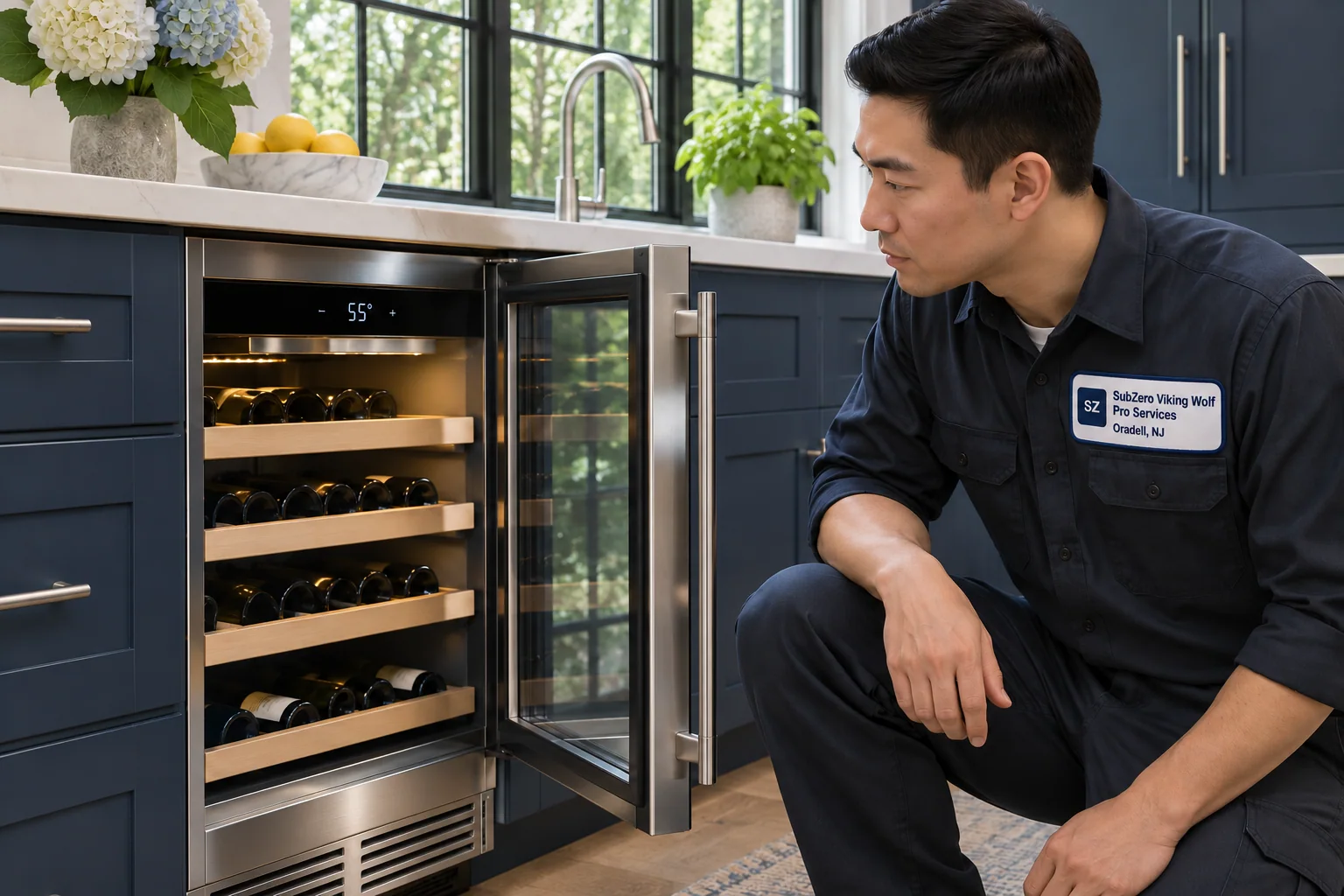
What the inspection needs to establish
The technician adapts the inspection to the installation and reported behavior. These are areas to evaluate, not a list of parts to replace.
- Compare the selected and observed conditions in each zone.
- Inspect door sealing, ventilation and the installation clearances appropriate to the unit.
- Check circulation fans, temperature sensors and controls.
- Assess cooling performance and any visible moisture source.
What you may be noticing
Keep observations separate from assumptions. Report the affected zone, cavity or cycle stage, what the controls show and what the appliance actually does. That gives the diagnostic visit a useful starting point.
- One storage zone drifting away from its setting.
- An alarm with no obvious door opening.
- Condensation around the door.
- Unusual vibration or fan noise.
- A cabinet that cycles differently after loading.
What the symptom tells us
Distinguish a temperature concern from a sound or moisture concern. A new vibration does not by itself establish cooling-system failure, and different selected temperatures may be intentional in a dual-zone cabinet. Record what changed from the appliance’s familiar operation. The findings determine whether the proposed work concerns installation, circulation, sensing or another system.
Before the visit
Keep the doors closed, protect the collection with suitable alternative storage if conditions are unreliable, and record each zone separately. Do not remove the unit from cabinetry or open refrigerant lines.
Clear a safe working area, keep any displayed message and mention custom panels or restricted access. Do not dismantle the appliance in preparation.
Separate the signal from the cause
A wine cabinet’s two zones may behave differently. Recording the zone, selected setting and timing avoids turning a local temperature change into a blanket cooling diagnosis.
Describe the Thermador cooking, refrigeration, wine-storage or dishwashing appliance and any custom panels or access restrictions. Standalone Thermador ice-maker service is not included in this site’s service list.
Diagnosis, approval and repair
The diagnostic/service call is $149, credited toward an approved repair. After diagnosis, you receive an itemized repair quote before work begins. Genuine OEM parts are used.
Availability, including same-day or emergency requests, depends on the address and schedule. Sending a request does not reserve an appointment.
The 1-Year Parts & Labor Warranty covers parts installed and labor performed under normal use. It excludes new unrelated faults, misuse, power surges and work performed by others after the visit.
Sealed-system and refrigerant work is performed by an EPA-certified technician. Manufacturer names identify equipment serviced; this is independent service.
From findings to a decision
The diagnostic fee and the repair quote are different steps. Describe the appliance and location first, then review the proposed parts and labor after testing. The team confirms the appointment and scope; a website request alone does not book a time.