What the inspection needs to establish
The technician adapts the inspection to the installation and reported behavior. These are areas to evaluate, not a list of parts to replace.
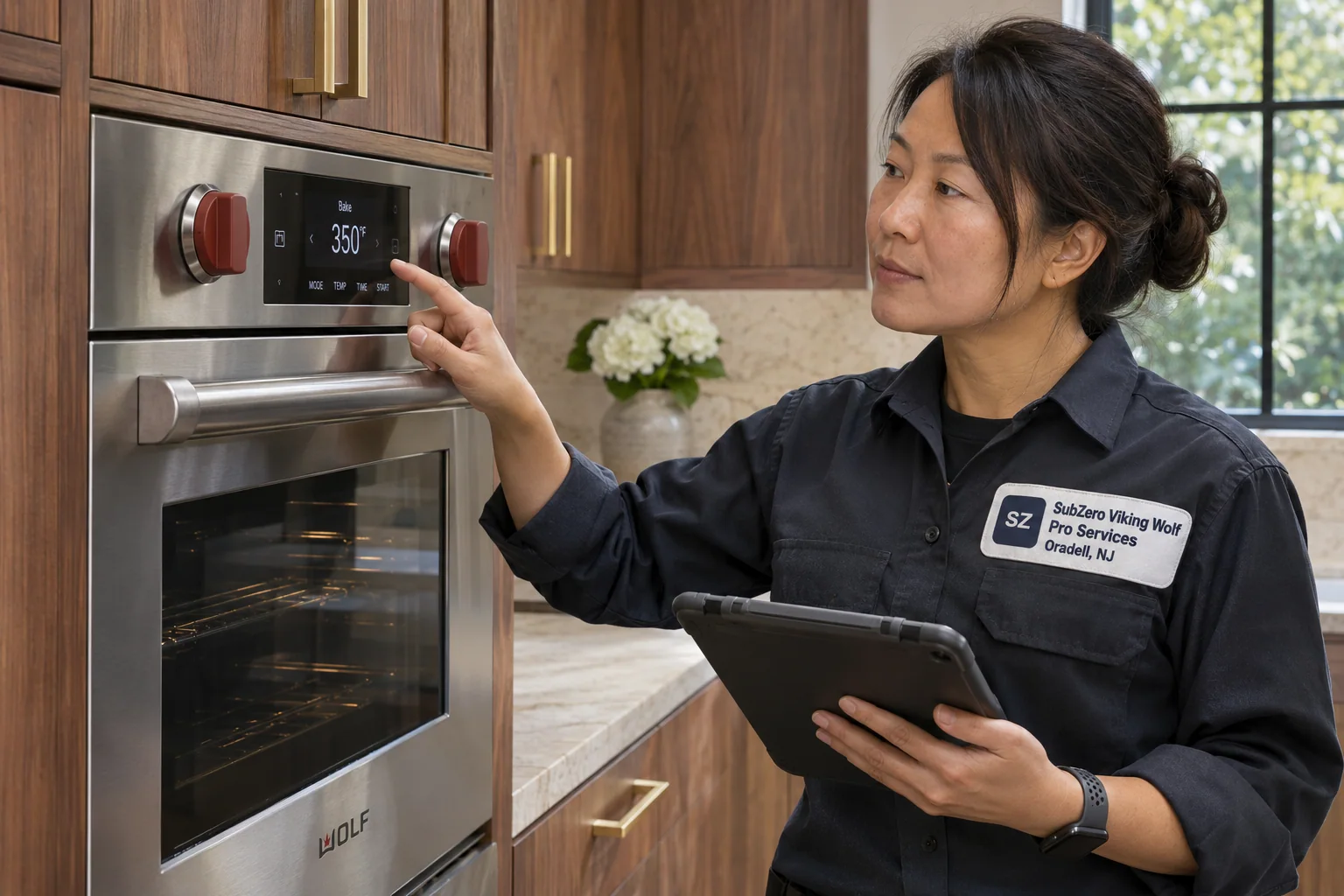
- Identify the affected cavity and cooking mode.
- Compare control response with actual heating behavior.
- Evaluate the applicable elements or ignition system, sensors and controls.
- Check door operation and installation access before proposing work.
What you may be noticing
Keep observations separate from assumptions. Report the affected zone, cavity or cycle stage, what the controls show and what the appliance actually does. That gives the diagnostic visit a useful starting point.
- The selected temperature not matching cooking results.
- One mode working while another does not.
- A door that does not close normally.
- A control message or unexpected shutdown.
- Preheat taking much longer than usual.
What the symptom tells us
Cooking results help describe a symptom, but they do not identify a failed sensor or a need for calibration by themselves. Include the mode, cavity and timing of the concern. The inspection compares control response, heating operation and relevant door behavior. An itemized quote follows the findings so the proposed adjustment or repair has a clear basis.
Before the visit
Let the oven cool and stop using an unsafe or unreliable function. Save any message exactly as displayed. Do not bypass a door lock, remove a wall oven or open electrical or gas compartments.
Clear a safe working area, keep any displayed message and mention custom panels or restricted access. Do not dismantle the appliance in preparation.
Separate the signal from the cause
With a double oven, the working cavity is a useful comparison. Record the affected cavity and mode instead of describing the entire appliance simply as not working.
Identify the Monogram appliance and any separate zones, cooking modes or cycle stages involved. Include whether the equipment is built in and whether access is restricted.
Diagnosis, approval and repair
The diagnostic/service call is $149, credited toward an approved repair. After diagnosis, you receive an itemized repair quote before work begins. Genuine OEM parts are used.
Availability, including same-day or emergency requests, depends on the address and schedule. Sending a request does not reserve an appointment.
The 1-Year Parts & Labor Warranty covers parts installed and labor performed under normal use. It excludes new unrelated faults, misuse, power surges and work performed by others after the visit.
Sealed-system and refrigerant work is performed by an EPA-certified technician. Manufacturer names identify equipment serviced; this is independent service.
From findings to a decision
The diagnostic fee and the repair quote are different steps. Describe the appliance and location first, then review the proposed parts and labor after testing. The team confirms the appointment and scope; a website request alone does not book a time.